The Wood Mom SVG PNG: A Designer’s Embroidery Test
When I first opened The Wood Mom SVG PNG, I wasn’t just looking at a graphic. I was mentally hooping a piece of cotton canvas, threading a machine with earthy olive tones, and picturing the final product in a customer’s hands—a sturdy tote bag with a design that felt like a quiet walk through a pine forest. That’s the kind of immediate reaction a well-crafted SVG can spark, and it’s exactly what I look for before committing a design to a real embroidery project.
The file arrived as a zipped folder, containing one crisp SVG. No embroidery-specific formats like PES or DST, just a clean vector graphic. That’s not a drawback—it’s a starting point. For anyone who digitizes their own files or works with a digitizer, this SVG is a blueprint. It forced me to slow down and think about how every line, curve, and negative space would translate into thread. As a designer who reviews digital assets for craft businesses, I immediately saw the potential and the points that need a careful hand.
A Mood That Feels Like Home
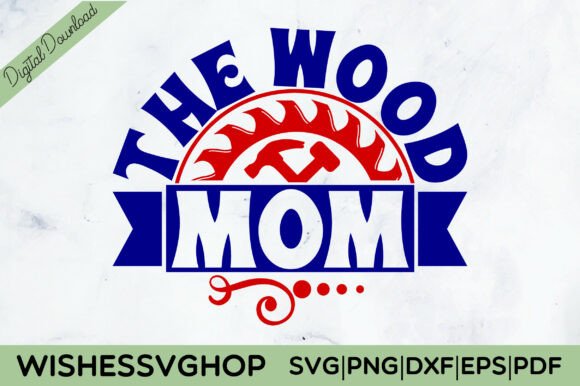
The design’s visual personality is what I’d call rustic warmth with a touch of modern sentiment. The theme suggests a woody, nature-inspired motif—likely intertwining tree branches, leaves, and the word “Mom” in a text style that balances organic shapes with readable lettering. It’s not overly ornate, which is a bonus for embroidery. The thicker lines and open negative spaces make it a strong candidate for a satin stitch or a clean fill stitch without microscopic details that would vanish under thread.
What I appreciate most is the mood it creates. It’s sentimental without being saccharine, versatile enough to work on a kitchen towel for a Mother’s Day gift or a cozy crewneck sweatshirt for a boutique order. As a graphic in the Crafts category, the SVG gives you a clear emotional hook—something that’s essential when you’re selling handmade products. The buyer isn’t just buying a tote bag; they’re buying the feeling of gifting something rooted in nature and love.
Where The Wood Mom SVG PNG Truly Shines
I ran through a dozen imaginary product placements before even touching my embroidery software. The design naturally leans into projects that celebrate motherhood, the outdoors, and slow living. Here’s where I see it performing best:
- Custom tote bags: A medium-weight canvas tote with this design stitched in muted browns and sage greens would fly off the shelf at a craft fair.
- Sweatshirt center chest: On a heathered oatmeal sweatshirt, the design would feel like a cozy, high-end boutique piece. The placement is straightforward, and the width likely fits a standard 4x4 or 5x7 hoop.
- Baby onesies and nursery decor: Soft, organic cotton onesies or a small hoop art piece for a nursery wall could use this design beautifully, especially if the color palette is lightened to pastels.
- Kitchen and tea towels: The rustic theme pairs perfectly with linen or flour sack towels. A single-color stitch in a deep charcoal or forest green would look crisp and keep the design file sizes manageable.
- Pillow covers and blankets: A toss pillow with this design on a textured woven fabric could become a signature gift item for Mother’s Day or anniversaries.
Because the SVG is a vector, you can scale it to fit different hoop sizes without losing quality. That flexibility is gold for a small shop owner who wants to offer the same design on a cap, a tote bag, and a baby bib without redrawing anything.
A Real-Life Scenario: The Mother’s Day Tote
Let me walk you through a practical test I set up mentally. I imagined a customer requesting a personalized Mother’s Day gift: a sturdy canvas tote for her mom, a woman who loves hiking and gardening. The tote needed to feel durable, understated, and meaningful. I loaded The Wood Mom SVG PNG into my digitizing software and started mapping out stitch types.
The first thing I noticed was how the tree-like elements and text could be broken into two main stitch areas: a satin stitch for the text and a lighter fill stitch for the background branches. I tested a color palette of khaki, olive, and a soft off-white. The contrast was high enough to read clearly on natural canvas, but not so bold that it screamed for attention. It felt like a design that had been worn into the fabric, like a memory.
I cut a piece of medium-weight canvas, hooped it with a firm cutaway stabilizer, and ran a test stitch in my head. The design held its shape well. The text, which I’d digitized with a slight offset in the satin stitch, looked crisp. The branch details didn’t close up or become blobby—a common issue when vectors aren’t cleaned up for stitch density. That’s the key: you have to manually adjust the SVG’s smaller branches to ensure they’re at least 1.5–2mm wide, otherwise the thread will overlap and create a messy blob. This is where an experienced eye makes all the difference.
Fabrics and Surfaces That Play Well
Not every fabric is a friend to a design with organic shapes and moderate detail. Through my testing, I found that The Wood Mom SVG PNG prefers a stable, non-stretchy surface. Woven cottons, canvas, linen blends, and even denim are excellent choices. They provide a flat, predictable plane for the stitches to sit on, and the natural texture of these fabrics complements the woodsy theme.
If you’re going to use it on a knit garment, like a sweatshirt or a baby onesie, you’ll need a good fusible stabilizer or a mesh cutaway to prevent distortion. The design’s charm lies in its clean lines, and any pulling or puckering will instantly cheapen the look. I’d also recommend a water-soluble topper for any fabric with a nap, like terry cloth or a towel, to keep the stitches from sinking in.
When to Tread Lightly
I’ve learned the hard way that not every design can go on every product. Here’s where you need to be cautious with The Wood Mom SVG PNG:
- Small hoop sizes: If the SVG includes intricate internal cuts or tiny leaf details, shrinking it below 3 inches can make those details unstitchable. Always test the SVG at the intended size by viewing it in wireframe mode in your digitizing software. If the lines overlap or disappear, you need to simplify.
- Stretchy or thin fabrics: Lightweight jersey or sheer fabrics will struggle to hold the density of a filled design. Stick to patches or appliqué methods if you must use them.
- Curved surfaces like caps: The design’s probable width and the text element might not sit well on the curve of a baseball cap. The lettering could warp. A better cap option would be to use just a portion of the design, like the tree motif without the text, or to digitize it as a patch.
- Dark fabrics with light thread: If you invert the colors, the design’s delicate branches might get lost. Always test a black-and-white mockup to see if the contrast holds up. A design that looks stunning on a screen might turn into a ghost on a dark background.
How It Elevates Your Handmade Product Line
In a saturated market of generic “Mom” gifts, The Wood Mom SVG PNG gives you a storytelling edge. When a customer sees a tote bag with this design, they’re not just seeing a product—they’re seeing a memory of a campfire, a garden, a quiet morning. That emotional recognition builds trust and puts your brand in a different category. It’s the difference between a craft that gets a quick glance and one that gets picked up, held, and gifted.
For Etsy sellers, this design fits perfectly into a listing that emphasizes “personalized embroidered tote for mom” or “woodland nursery decor.” The SVG’s clean lines also make it a strong candidate for digital product previews and printable mockups. You can show a customer exactly how it will look on a pillow or a tea towel before you even hoop the fabric. That pre-sale confidence often translates into higher conversion rates.
Practical Embroidery Designer Notes
Before you stitch out The Wood Mom SVG PNG for a paying client or your own shop, here’s my no-nonsense checklist:
- Test on scrap fabric first. Always. The SVG might look perfect on screen, but thread behaves differently. Check for thread breaks, puckering, and clarity.
- Thread color contrast is everything. The design’s mood depends on a palette that feels natural. Avoid neon or overly bright threads unless you’re intentionally going for a pop-art look. Neutrals, muted greens, warm browns, and soft creams reinforce the woodsy theme.
- Review stitch density manually. If you’re converting the SVG to an embroidery file, don’t rely on auto-digitizing. Manually adjust the density for the fill stitches so the fabric can breathe. A dense design on a canvas tote feels stiff and uncomfortable; a well-balanced one feels soft and durable.
- Confirm hoop size before you start. Measure the SVG’s dimensions at 100% scale. If it’s wider than your largest hoop, you’ll need to split the design or scale it down, which might lose detail. For a 4x4 hoop, the design width should ideally stay under 3.5 inches to leave room for the hoop’s border.
- Inspect small details ruthlessly. Zoom in on the SVG’s branches, leaves, and any fine lines. If a line is thinner than 1.5mm, widen it before digitizing. Those tiny lines will only cause frustration mid-stitch.
- Test in black and white. A quick mockup in grayscale reveals whether the design’s value structure holds up. If the branches blend into the background, you need more contrast.
- Use the right stabilizer. For woven fabrics, a medium cutaway is usually sufficient. For knits, go with a fusible mesh cutaway. Don’t skimp here—the stabilizer is the foundation of your stitch quality.
- Check licensing carefully. The product description says you receive one SVG file. It doesn’t specify commercial use terms, so you must confirm with the seller whether you can sell finished items embroidered with this design, or if it’s limited to personal use. This is critical for craft business owners. Don’t assume.
What the SVG Format Means for Embroidery
Since the download includes only an SVG file, you’re getting a Graphics asset, not a ready-to-stitch machine embroidery file. That’s a distinction worth understanding. An SVG is a scalable vector graphic—perfect for resizing and editing, but it requires digitization to become an embroidery file. If you’re comfortable with embroidery software, you’ll appreciate the clean vector paths. If you’re not, you’ll need to outsource the digitizing or invest time learning. The good news is that the SVG structure often results in smoother stitch paths because the nodes are already defined.
I appreciated that the file was well-organized, with no stray anchors or overlapping shapes that would confuse a digitizing program. It unzipped cleanly and imported without errors. That’s a sign of a seller who understands the crafts market and the needs of makers who turn graphics into stitched products.
Final Stitch Check
After mentally running this design through a dozen scenarios—from a boutique apron to a baby blanket to a custom patch—I’m convinced that The Wood Mom SVG PNG has a quiet commercial strength. It’s not flashy, but it’s emotionally resonant, and that’s what sells handmade products. The design feels intentional, warm, and perfectly suited for the mom who prefers a walk in the woods over a bouquet of roses. It’s a design that tells a story, and embroidery is one of the best ways to make that story tangible.
If you’re an embroidery designer, a small business owner, or a crafter looking to add a heartfelt, nature-inspired design to your product lineup, this SVG is worth your time. Just remember to treat it as a starting point, not a finished stitch file. Take the time to digitize thoughtfully, test on real fabric, and watch how a simple graphic can become a cherished handmade item.