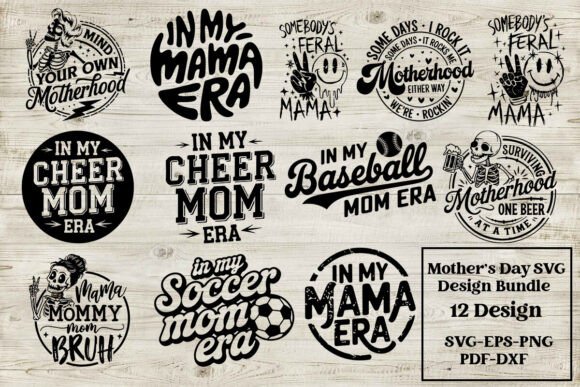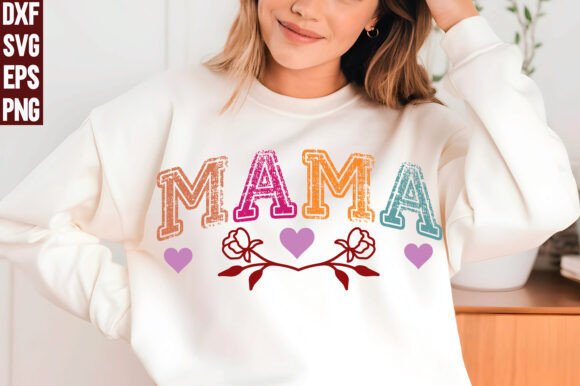
Messy Bun Mama Mom SVG Bundle Cut File: A Designer’s Real-Use Review
First Look at the Messy Bun Mama Mom Design
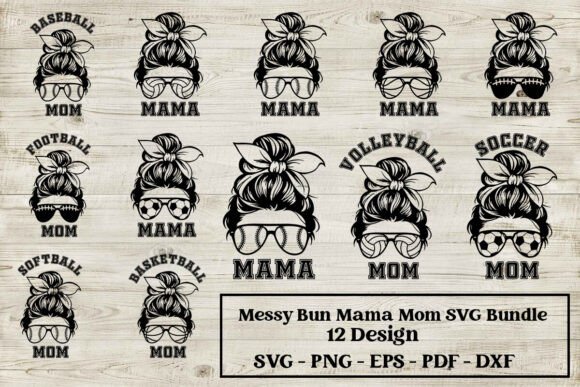
When I unzipped the Messy Bun Mama Mom SVG Bundle, the mood was immediate and unmistakable. It’s playful, warm, and entirely unapologetic—exactly the sentiment a lot of makers want to capture for mom-themed merchandise. The graphic centers on a recognizable messy bun silhouette, often paired with script or block lettering that reads “Mama” or “Mom.” The linework leans clean enough to translate well into embroidery, but the character of the hair texture and the casual flow of the typography give it a handmade feel even before a single stitch lands on fabric.
From a design evaluation standpoint, the bundle feels like a versatile starting point. The silhouettes and text arrangements are clearly meant for a wide range of crafts, but my eye immediately went to machine embroidery. The shapes are well-defined. The negative space around the bun and letters is generous enough to breathe, which matters a lot when you’re planning stitch types and avoiding a dense, bulletproof patch. It’s a graphic that invites you to think about how it will actually look once thread hits the hoop.
Where This Design Feels Most at Home
I mentally placed the Messy Bun Mama Mom SVG Bundle Cut File on a handful of products I’ve made for clients and craft shows. The first thing that came to mind was a soft, slouchy sweatshirt. A relaxed garment pairs perfectly with the messy bun concept—both are comfortable, a little undone, and totally relatable. A subtle satin stitch outline for the bun with a light fill on the hair, combined with a clean running stitch for the text, would sit beautifully on the front left chest or a larger back placement.
Tote bags are another natural fit. I pictured a natural canvas tote with the design stitched in a warm terracotta or deep olive thread. The simplicity of the shape holds up well on a textured woven surface. For baby items, the same design scaled down to fit a onesie or a tiny bib brings a different kind of charm. Parents love wearing the “messy bun mama” identity, and gifting a matching set—a small embroidered piece on a baby outfit and a larger version on a mom’s tee—creates a strong emotional connection that wholesalers and boutique owners notice immediately.
I’ve also seen this type of design work on kitchen towels and aprons. A quick stitch on a flour sack towel with a minimal color palette turns it into a lighthearted hostess gift. The design’s personality is friendly enough for a holiday market, but not so trendy that it feels dated after one season. That gives it real staying power for small shop inventory.
How the Shape and Detail Level Affect Embroidery
The messy bun silhouette is the core of this graphic. In vector form, the hair strands are often represented by smooth curves or a few stylized swoops. When you digitize for embroidery, those curves need careful attention. If the hair detail is too fine, a satin stitch might get lost on textured fabric or pucker on a lightweight knit. I’d lean toward a light fill stitch for the hair mass, with a satin outline to define the shape, and keep the inner texture minimal. The text is another critical area. Depending on the font style included in the bundle, the lettering might be thin script or thicker block type. Thin script under 5mm in height can be tricky on a home embroidery machine, especially on a cap or a curved surface. Block text is more forgiving, but still demands a test stitch to check that the counters in letters like “a” and “m” don’t close up.
Because this is a bundle, you likely have multiple layout options. Some might be horizontal, others stacked. The stacked versions with a smaller “mama” beneath the bun are sweet, but they can become very tall. Hoop orientation matters. A 4×4 hoop might require you to shrink the design significantly, which risks losing the hair texture entirely. I’d recommend a 5×7 or larger hoop for most variations if you want the details to read clearly after stitching.
Bringing the Design to Life on Fabric
A few weeks ago, I was preparing a custom order for a returning customer who runs a small mom-focused boutique. She wanted a set of embroidered sweatshirts and matching mini beanies. I pulled the Messy Bun Mama Mom SVG Bundle into my digitizing software and started tracing. The PNG with transparent background was helpful for quick placement mockups, and the SVG gave me clean paths to work with. I tested the design on a scrap of French terry similar to the final garment. The first stitch-out revealed that the bun shape needed a slightly wider outline to read well on the textured fabric, and the thread color I’d chosen—a soft dusty rose—blended into the sample more than I liked. I switched to a slightly deeper mauve and the contrast improved immediately.
That real-project experience reinforced something I always tell other embroiderers: the visual appeal of a graphic on screen is only half the story. The way thread interacts with fabric texture, the stabilizer choice, and the hoop tension all affect the final piece. For this design, a medium-weight cutaway stabilizer worked well on the sweatshirt, and a wash-away topper kept the stitches from sinking into the fleece. On the beanies, I used a heavy water-soluble stabilizer and a very light underlay to prevent the design from distorting on the stretchy knit.
Things to Watch for on Tricky Surfaces
Not every product is a safe match for this design. If you’re planning to stitch it on a cap, the curved front panel can pinch the bun shape or warp the baseline of the text. I’d test the scaling and curve compensation carefully. Dark fabrics, like a deep charcoal or navy sweatshirt, can swallow the finer hair details unless you lighten the thread color or use a subtle outline contrast. Stretchy fabrics demand a no-stretch stabilizer and a basting box to keep everything in place. Thin fabrics, like a lightweight jersey, can show puckering behind a dense fill, so I’d either reduce the stitch density or use an applique approach for the bun itself.
Small hoop sizes are a common constraint. If you’re limited to a 4×4, you might need to separate the bun and text into two placements, or choose a condensed version from the bundle. Always check the smallest lettering size. If the “mama” text drops below 4mm in height, the stitches can become a tangled mess, especially on a looped fabric like a towel. I’d rather use a larger hoop and keep the design clean than force it into a small area and lose the professional finish.
What the Design Does for Product Value and Customer Trust
From a business perspective, the Messy Bun Mama Mom SVG Bundle Cut File taps into a strong emotional niche. Shoppers looking for a gift for a new mom, a friend in the messy bun phase of life, or even for themselves often gravitate toward designs that feel personal and a little humorous. The phrase isn’t overly sentimental; it’s honest. That honesty translates into higher engagement on Etsy listings and social media posts. When a customer sees the finished embroidered piece on a model wearing a messy bun, they instantly recognize themselves in the product. That recognition builds trust and speeds up purchase decisions.
The design also gives you a lot of flexibility in product presentation. Because the bundle includes a PNG with a transparent background, you can create digital mockups that look polished and professional without having to stitch every variation. That’s a valuable asset for a craft business owner who wants to list multiple product types—tote bags, sweatshirts, baby onesies, pillows—without spending a full day at the machine for each photo. The EPS and PDF files add further value for those who work with commercial printers or plan to scale the design for sublimation or screen printing alongside embroidery.
Practical Embroidery Designer Notes
Before you commit this design to a final product, I’d strongly recommend a few practical steps. First, do a test stitch on fabric that matches your intended product. Check the thread color contrast in both bright and dim light. A thread that looks crisp on a digital screen can wash out completely on a real garment. Second, review the stitch density. If you’re digitizing the design yourself, keep the fill on the bun light enough to avoid a stiff, cardboard-like patch. Mom-life products tend to be worn often and washed frequently, so comfort matters.
Third, confirm the hoop size. The SVG paths will tell you the exact dimensions once you import them into your software, but always add a little extra margin for your hoop. Fourth, inspect the small details. Zoom in on the hair strands and the lettering connections. Anything that looks delicate in the vector file might need to be slightly thickened or simplified for embroidery. Fifth, test the design in black and white. A mockup without color reveals whether the shape holds up on its own. If the silhouette becomes unrecognizable, you may need to adjust the linework.
Finally, check the licensing terms. The bundle description says you receive a ZIP folder with SVG, DXF, PNG, EPS, and PDF files. These are graphic design assets, not ready-to-stitch embroidery files. You’ll need to digitize the design yourself. Before you sell finished products or include the design in a commercial embroidery collection, make sure the license allows for that use. Many SVG bundles come with a personal use license only, and some require an extended license for physical items. Don’t assume—verify.
An Honest Takeaway for Makers and Small Shops
The Messy Bun Mama Mom SVG Bundle is a smart addition to a maker’s design library, especially if you already have the digitizing skills to convert it for embroidery. The mood is current, the shape is adaptable, and the emotional hook is strong. It’s not a one-click solution for machine embroidery—you’ll need to put in the digitizing work, choose the right stabilizer, and test on the fabric you plan to use. But for those willing to do that, the design pays off in a finished product that feels personal, modern, and genuinely giftable.
I’d use it again for boutique orders, craft fair inventory, and last-minute personalized gifts. It’s the kind of design that makes customers smile before they even check the price tag. And in a handmade business, that’s exactly the reaction you want.